

 Review
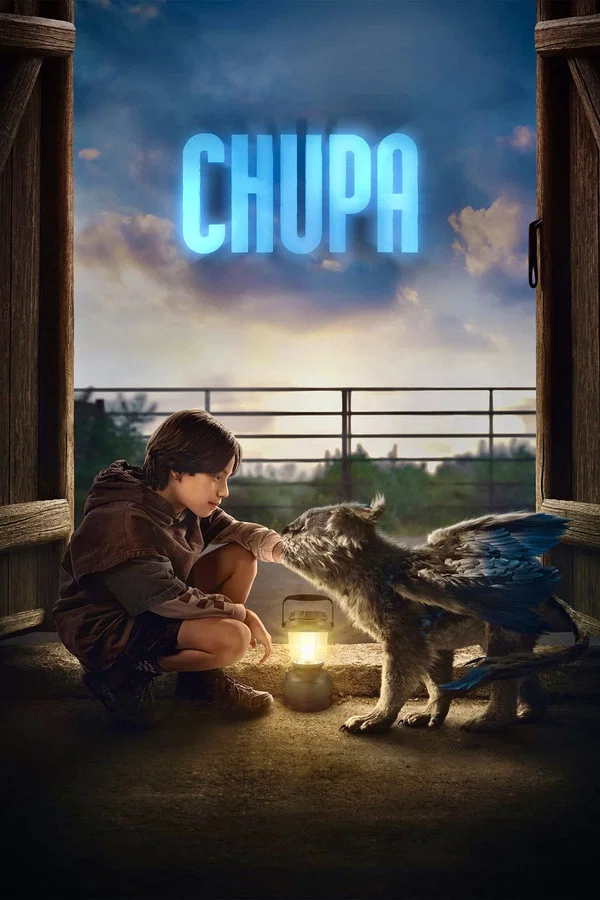
Chupa (Family, Fantasy, Drama) (2023)
Director: Jonás Cuarón
Writer: Sean Kennedy Moore, Joe Barnathan, Marcus Rinehart, Brendan Bellomo, Michael Dougherty
Stars: Evan Whitten, Christian Slater, Demián Bichir, Ashley Ciarra
After discovering a mysterious creature on his family’s ranch, a young boy forms a unique bond while reconnecting with his roots.
Set to direct a Chupacabra-based feature in late 2020, Jonás Cuarón completed his collaborative script and began filming across New Mexico through October 2021. Previously, he had co-written the script for 2013’s Gravity alongside his father Alfonso Cuarón, which is considered his breakthrough project. It was produced by 26th Street Pictures and distributed direct-to-streaming by Netflix.
Often teased at school and embarrassed by his heritage, Alex (Evan Whitten) is sent to visit his family in Mexico—his grandfather Chava (Demián Bichir) and cousins Memo (Nickolas Verdugo) and Luna (Ashley Ciarra). Struggling to adjust to a culture unfamiliar to him, he begins hearing strange sounds from the barn, discovering a chupacabra cub sheltering on the ranch. Together with his relatives, he nurtures the creature to health as they protect it against those who seek to harm it.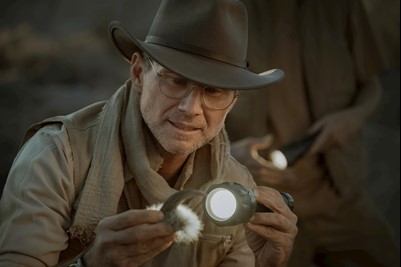 Framed as a child’s encounter with a mythical creature during a trip to Mexico—Chupa positions itself as a story of cultural realignment, heritage, and belonging. It presents this through a light-hearted familial drama, with childish innocence and care at the forefront.
Socially lost and distanced from his heritage, Alex grows towards a culture that once felt shameful. His bond with Chupa becomes connective tissue, fostering a sense of togetherness and belonging within Mexican culture, and between him, his cousins, and his abuelo, in Chava. Identity is reinforced through care and proximity rather than discovery alone. As Alex finds his own purpose, Chava’s mind wanders, losing himself in implied dementia. This introduces a generational fragility, further grounding the connection, strengthened by the inclusion of Lucha Libre, where personas are often passed down—tying Alex into a cultural heritage defined by continuity across generations.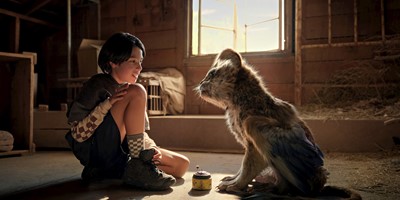 Largely due to its derivative nature, Cuarón relies on familiar, often clichéd, fundamentals—echoing films of yesteryear, particularly in a Spielbergian sense, without understanding their emotional grounding. There remains a sense of innocence, with the mostly inexperienced child actors allowing a subtle warmth to support the imitation and a care that sits at its heart. Sadly, this does not lift the misguided use of these attributes; instead, it implies a nostalgia that hasn’t been earned. Before Chupa can fly, it has to walk capably, and that is exactly the issue; as we begin to embrace Whitten’s Alex, continued layers are added which the foundation cannot hold, collapsing under the weight of its own wings.
An endearing promise and a mythical cub aren’t enough to drive the nostalgic 90’s energy home. Chupa struggles with the sum of its parts. Any warmth below the surface is left frigid, despite the Mexican heat, which should feel lively. Bichir and Slater, as veterans of this family feature, try their best, much like an experienced luchador training their pupils. But when even a signature suplex translates into an awkward, erroneous manoeuvre, the film’s lack of understanding becomes clear.
Verdict
Eerily familiar, yet sucked dry.
5.5